A 2025 season under pressure
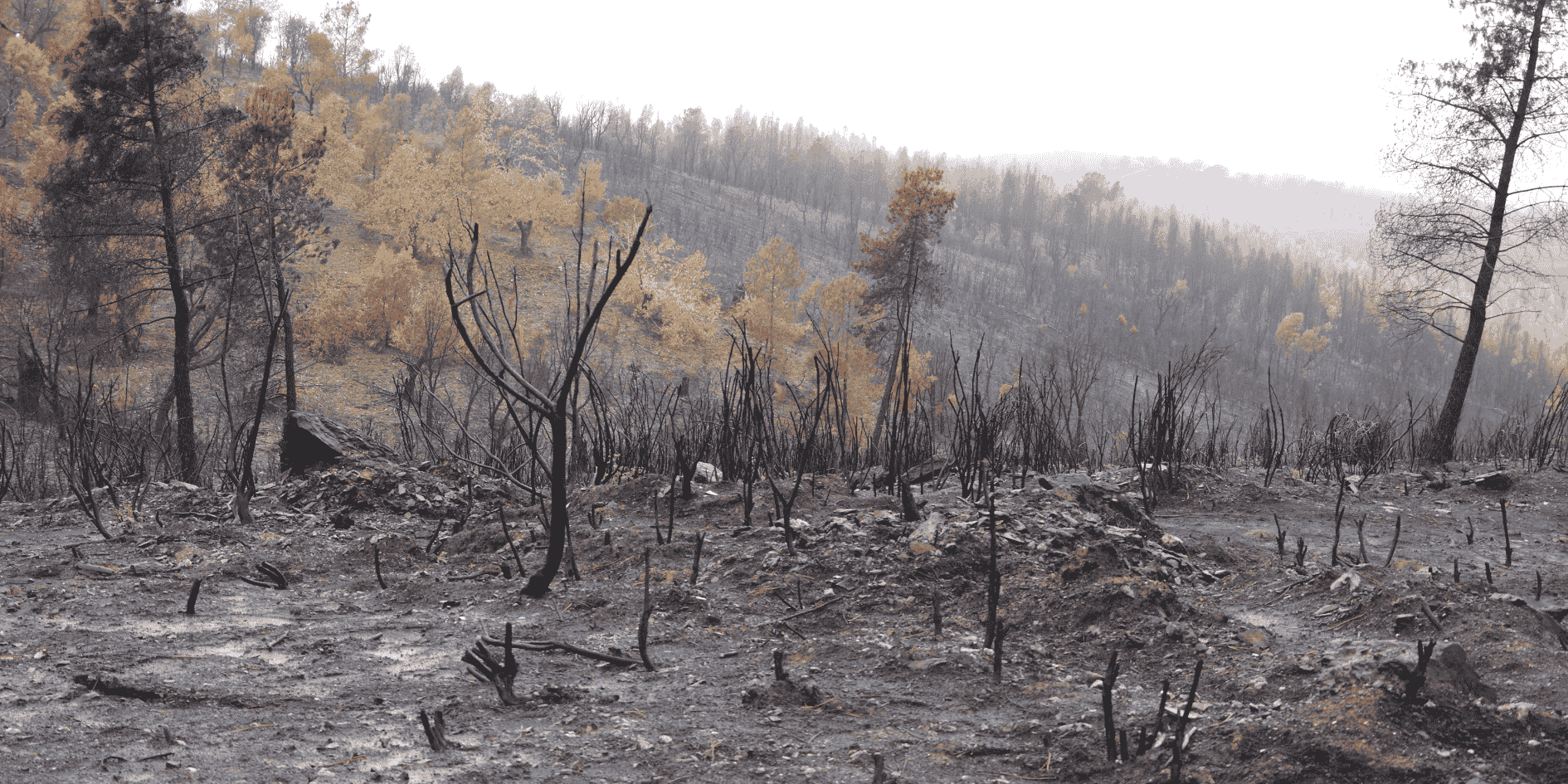
Over the entire summer season, France recorded, according to the National Forestry Office (ONF), nearly 15,000 Fire starts all categories combined. These fires affected more than 30,000 hectares of vegetation, including nearly 20,000 hectares of forests. Figures that greatly exceed the averages observed between 2006 and 2021, with a season accounting for around one and a half times as many fires and nearly twice as many burned areas.
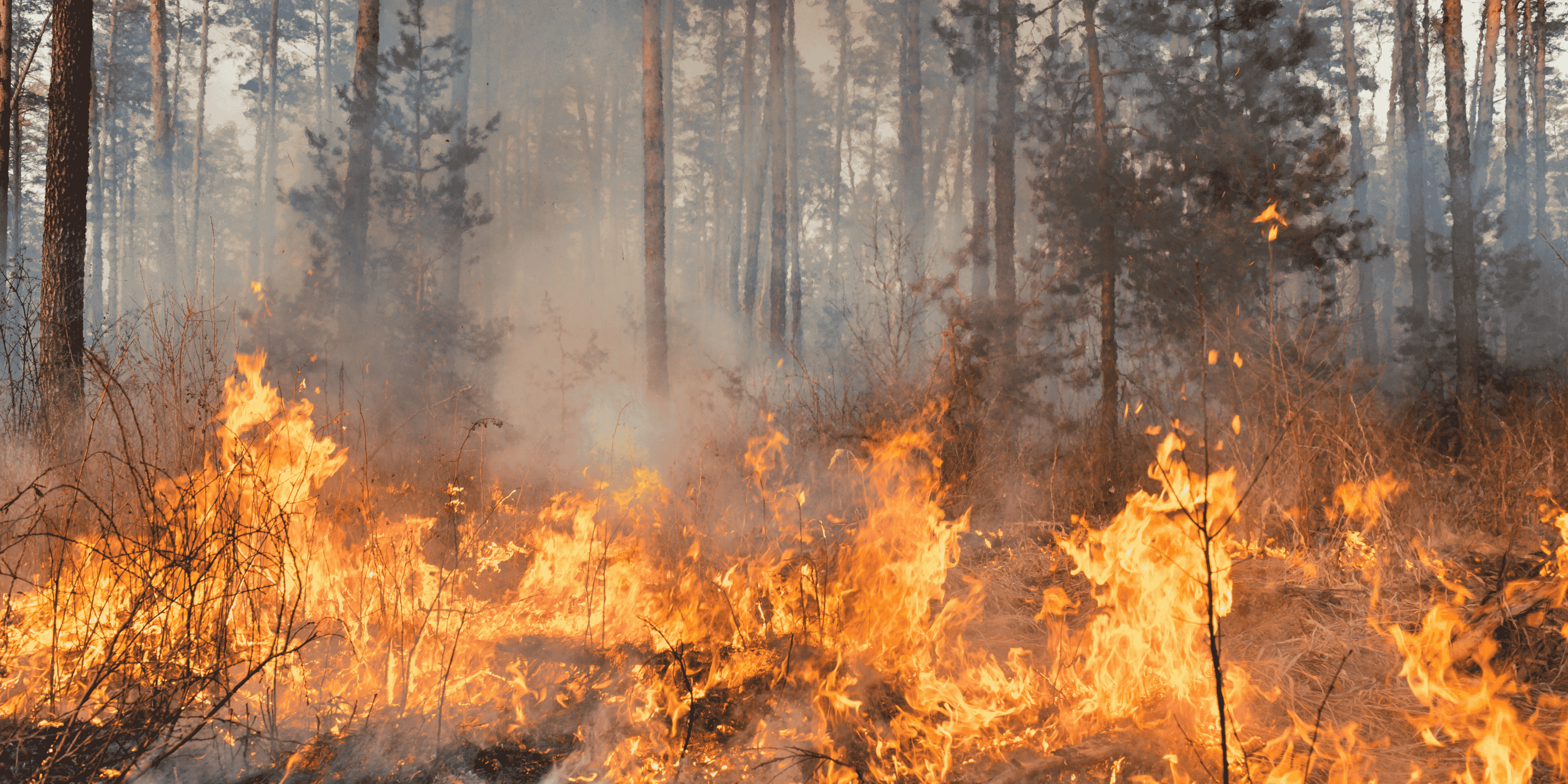
The observations of The Forest Fire Prevention and Reporting Association (PSFDF) confirm this increase in power. In total, 809 fires were identified in 2025, including 698 during the summer vigilance period, between June and September, and 111 during the extended vigilance periods before and after summer. Despite this high volume of fires, only 21 fires exceeded the threshold of 100 hectares, or 2.6% of the fires recorded, thanks to a rapid intervention emergency services.
95% of fires under control
One of the lessons of the year 2025 lies in the ability to contain fires from their first minutes. According to the ONF, 95% of fires started were controlled before reaching 5 hectares. This result is based on a combination of various factors: a massive and coordinated mobilization of human and air resources, reinforced surveillance of forest areas, and especially a ever earlier detection fires starting. It is precisely at this stage that advanced fire detection solutions, integrating artificial intelligence make perfect sense by strengthening existing systems and by offering emergency services a decisive gain of time.
A rapidly evolving geography of risk
The year 2025 will also remain marked by extraordinary fires. On August 5, a fire broke out in the town of Ribaute, in the Corbières massif, in Aude. In a few hours, the fire got out of control and became the largest fire recorded in France in several decades, recalling that some disasters can reach under extreme conditions.
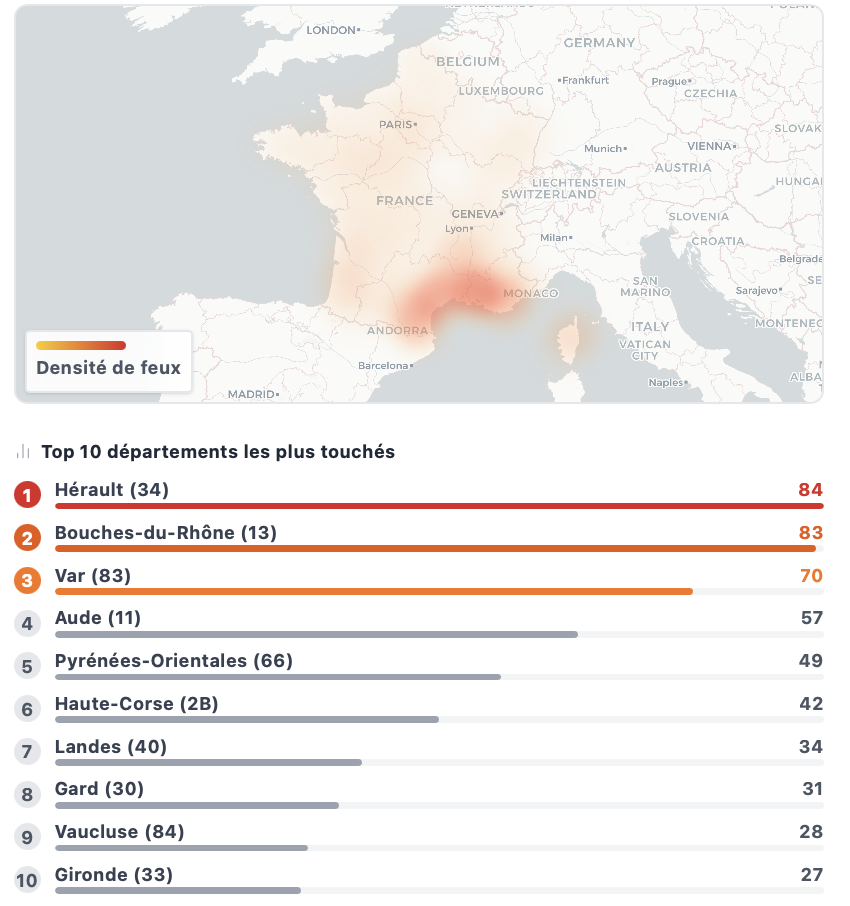
While the Mediterranean arc remains the most exposed area, this year confirms the gradual extension of fire risk to new territories. The ONF underlines that the fire season is now tending to lengthen and extend northwards, affecting regions that were previously less concerned such as Brittany, Val-de-Loire or even Jura. This evolution requires the adaptation of prevention and surveillance strategies at the national level.
Prevention, surveillance and artificial intelligence
The 2025 balance sheet thus confirms an unavoidable reality: the fire risk is now structural, longer and more geographically extended. Faced with this evolution, the integration of ultra-early detection technologies, ofArtificial fire intelligence and real-time coordination is an essential complement to existing human and operational resources. Because on the ground, preventing earlier means better containing and protecting territories, populations and ecosystems in a sustainable manner.


